
Choosing the Right Artwork Size
Choosing the right size artwork can feel oddly complicated. You find a painting you like, then suddenly you’re measuring walls, staring at the sofa, second-guessing the dining room, and wondering if the painting is too big, too small, or quietly judging you from across the room.
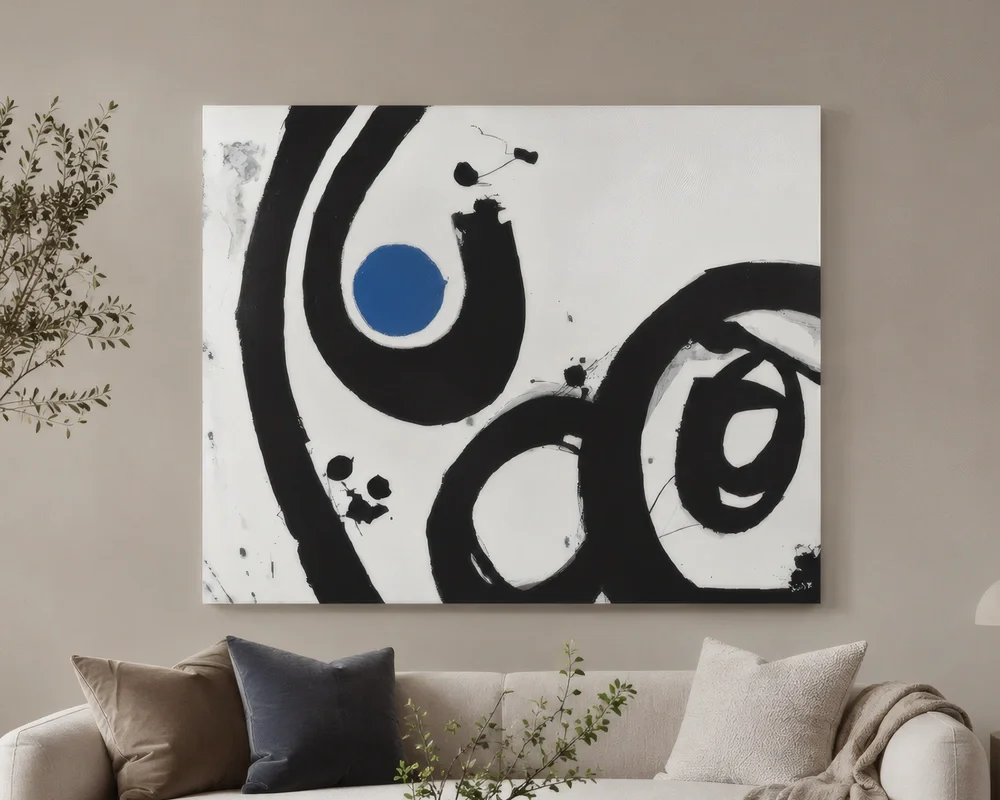
The good news is that artwork size does not have to be exact down to the inch. Scale matters, but it is not only about measurements. It is about how the piece holds the wall, how it relates to the furniture, and what kind of presence you want in the room.
A small painting can be strong. A large painting can be quiet. The right size depends on what you want the artwork to do.
Start with the wall, not just the painting
Before choosing a size, look at the wall where the artwork might go. Is it a wide open wall over a sofa or console? A narrow wall in a hallway? A small area beside a bed? A quiet kitchen shelf? A tall entryway?
The wall gives you the first clue.
A large empty wall usually needs artwork with enough scale to hold its own. That does not always mean one huge painting, but it does mean the art needs enough visual presence to feel intentional. A tiny piece floating alone on a big wall can look lost, unless that is the point and the room is designed around that kind of quiet spacing.
A smaller wall, shelf, corner, or hallway can work beautifully with a small original painting. Small art does not have to feel like a backup plan. Sometimes it creates the most personal moment in the room because you experience it up close.
Think about the furniture under it
If the artwork is going over a sofa, bed, console, sideboard, desk, or mantel, the furniture matters. The painting should feel connected to what is below it, not like it accidentally wandered into the room and got nervous.
For a wide sofa or bed, a larger horizontal painting often works well. It can give the wall structure and help the space feel finished without looking overly decorated. For a narrow console, small desk, or side table, a smaller vertical piece or a pair of small works may feel more natural.
The goal is not to match the furniture perfectly. The goal is for the artwork and the furniture to feel like they know each other exist.
Large artwork changes the room
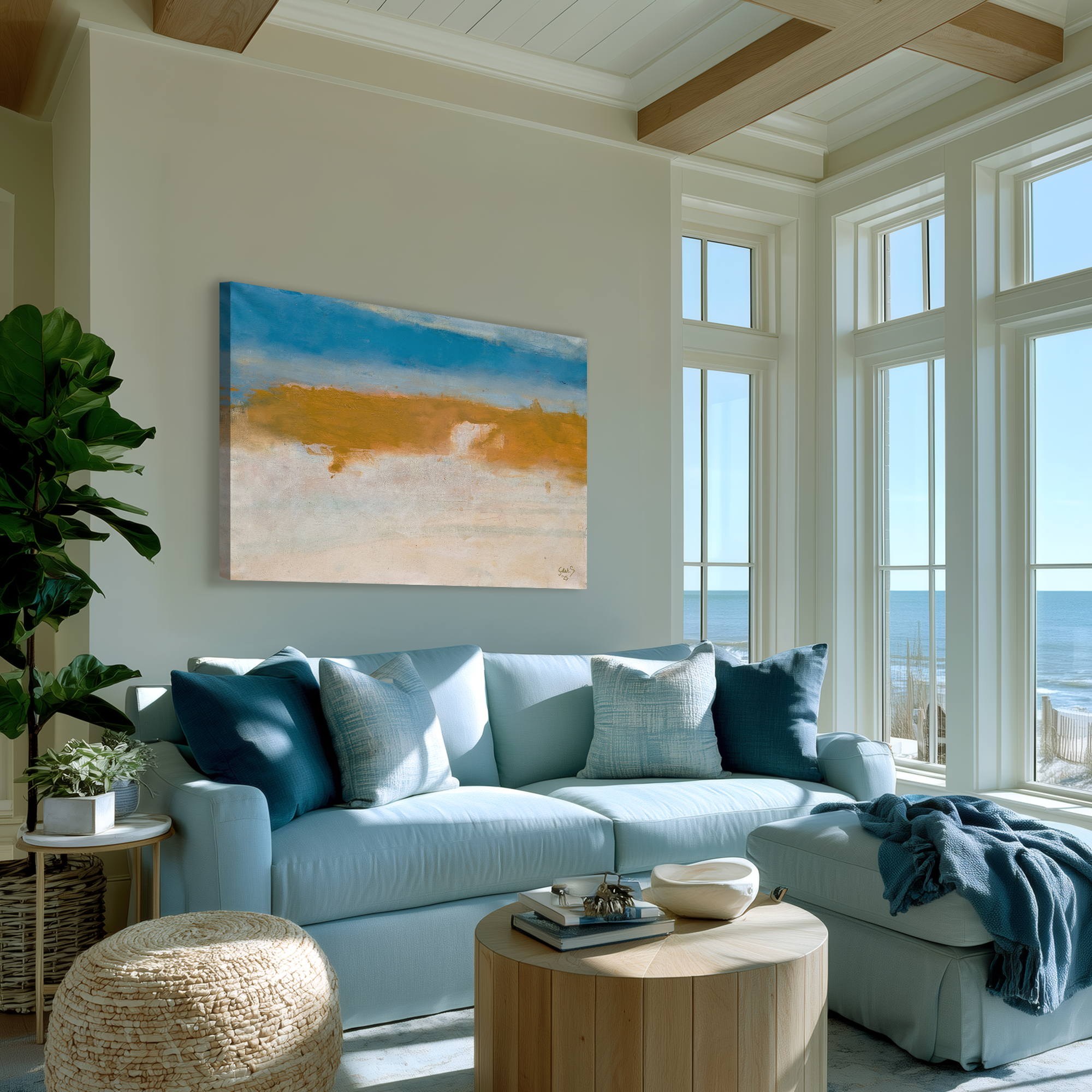
Large original paintings have a different kind of presence. They can anchor a living room, entryway, dining room, office, reception area, or professional space. A large abstract painting can bring movement, color, atmosphere, and structure without needing to describe anything literally.
This is one reason large abstract work can be useful for interiors. It can hold a wall without making the room feel themed. It can add energy to a quiet space or bring a little weight to a room that feels too light and polished.
Large work is also easier to notice from across the room. That matters in open living areas, offices, restaurants, and hospitality spaces where the artwork needs to carry visually from a distance.
Small artwork creates quieter moments
Small original paintings work differently. They usually do not dominate a room, and that can be a good thing.
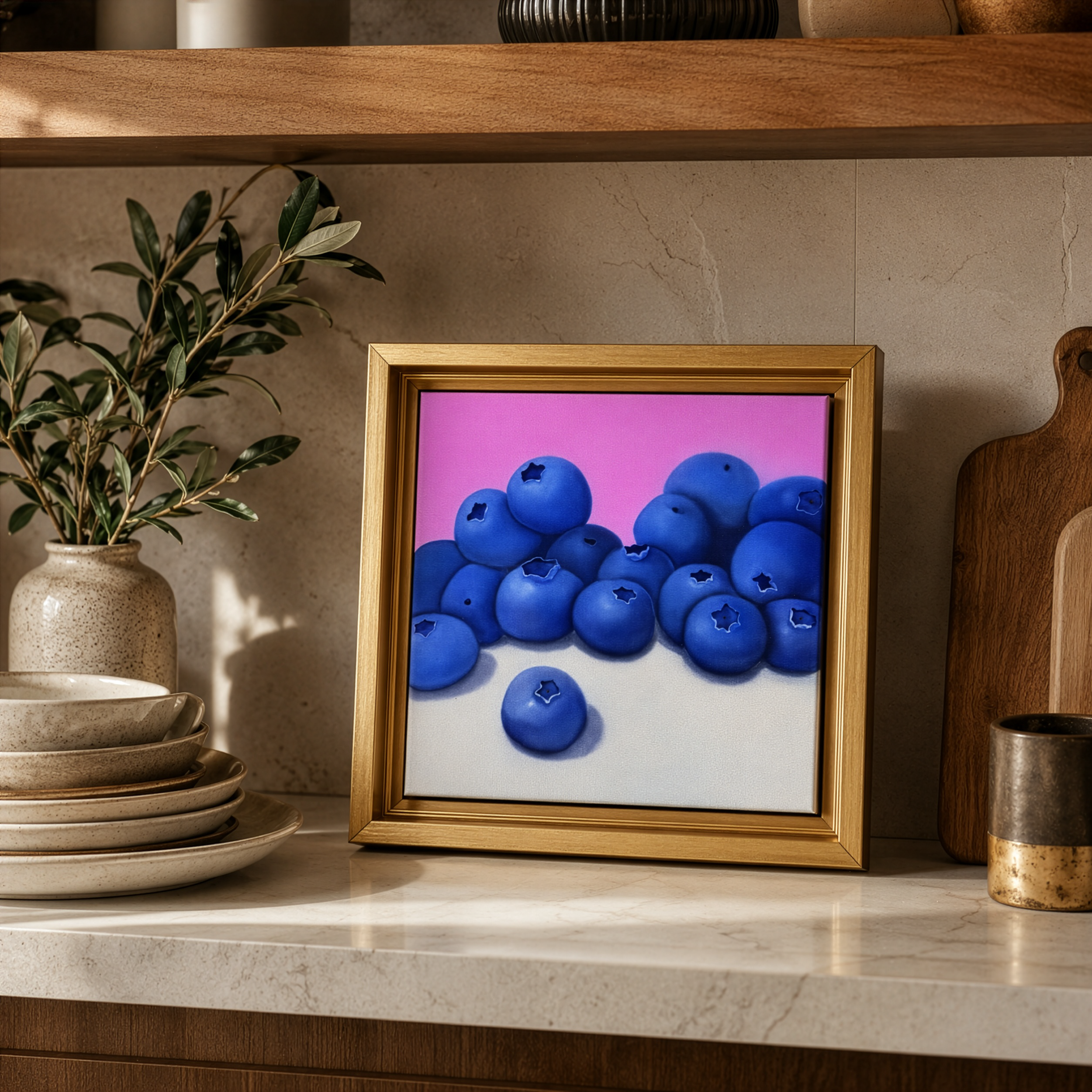
A small still life painting can work on a kitchen shelf, in a dining area, beside a bed, in a hallway, on a small wall, or as part of a collected grouping. A small abstract work can bring color, mark-making, and texture into a space without taking over the whole conversation.
Small paintings invite people to come closer. They can feel more intimate because you see the brushwork, surface, subject, and edges from a shorter distance. There is something good about artwork that asks you to slow down for a second. Not everything needs to shout from above the sofa.
Consider viewing distance
A room changes how you see a painting.
In a living room or office where you see the art from several feet away, a larger piece may work better because it has enough scale to read across the space. In a hallway, kitchen, reading nook, bedroom corner, or shelf, smaller work can be more effective because people see it up close.
This matters for both abstract paintings and still life paintings.
Abstract work often relies on movement, shape, color, texture, and overall composition. It can hold up well at a larger scale because the whole painting becomes part of the room. Still life paintings often reward closer viewing because the subject, brushwork, and small decisions become more noticeable.
Neither is better. They just behave differently.
Do you need one large piece or several smaller ones?
Sometimes one large painting is the cleanest answer. It gives the wall a clear focal point and keeps the room from feeling cluttered.
Other times, a grouping of smaller works makes more sense. Small paintings can be collected over time, arranged on a shelf, grouped in a hallway, or placed in a way that feels more personal and less formal. A group of small works can also work well when you want flexibility, especially if you like moving things around.
A single large painting feels direct. A group of smaller paintings feels collected. Both can be right.
How big is too big?
A painting is probably too big if it overwhelms the wall, crowds the furniture, or makes the room feel cramped. Large artwork should feel strong, not like it is trying to win an argument with the ceiling.
That said, people often choose art too small before they choose it too large. A larger painting can feel surprisingly natural once it is on the wall, especially in rooms with high ceilings, wide furniture, or open floor plans.
If you are unsure, use painter’s tape to mark the size on the wall. Live with the outline for a day. It is not glamorous, but it works. The tape has no ego.
How small is too small?
A small painting is too small only if it feels disconnected from the space around it.
A small work can be excellent when it is placed with intention: on a shelf, in a small frame grouping, on a narrow wall, near a lamp, beside books, in a kitchen, or in a quiet corner. It starts to feel wrong when it is placed alone in the middle of a large wall with nothing around it.
Small art needs context. Give it a place where it can be seen.
For interior designers, scale is part of the job
For designers sourcing original art, size is often one of the first practical questions. The piece has to work with the wall, furniture, lighting, traffic flow, and overall feeling of the room.
But original art is not just a design object. It has its own presence. The best result usually happens when the artwork supports the space without becoming wallpaper for the concept.
For homes, offices, restaurants, and professional spaces in Cary, Raleigh, Durham, and the Triangle, buying directly from local artists can make scale decisions easier. You can ask about the exact size, presentation, pickup, delivery, framing needs, and whether another piece or commission might be a better fit.
So, what size artwork should you choose?
Choose the size that fits the job.
If the artwork needs to anchor a room, go larger. If it needs to create a quiet personal moment, small can be better. If the wall feels empty, think about scale. If the room already has a lot going on, consider something quieter or more focused.
The right size should feel intentional. It should give the room something it did not have before without making the whole space feel like it was designed around a ruler.
Original art should live well in the room, but it should also hold its own. That balance is where the good stuff usually happens.
Quick answers
What size artwork should I choose over a sofa?
A larger horizontal painting usually works well over a sofa because it relates to the width of the furniture and gives the wall a clear focal point. The piece does not have to fill the entire space, but it should feel connected to the sofa rather than floating randomly above it.
Can small original paintings work in a room?
Yes. Small original paintings can work beautifully on shelves, narrow walls, bedside areas, kitchens, hallways, and collected groupings. They are especially good in places where people can see them up close.
Is large artwork better for offices or professional spaces?
Large artwork can work well in offices, reception areas, conference rooms, restaurants, and other professional spaces because it has enough scale to be noticed from a distance. The right piece can bring presence without making the room feel overdone.
Should I choose the artwork before or after decorating the room?
Either can work. If the room is already finished, artwork can bring the final layer. If the room is still being designed, a painting can help guide the mood, color direction, and feeling of the space.
Need help choosing the right size?
This article expands on a question from the Sauls Collective FAQ about choosing the right artwork size for a room.
If you’re looking for original art for a home, office, restaurant, or design project, you can contact Sauls Collective about available paintings, specific sizes, commissions, local delivery, or shipping questions.
