
Should Original Art Match Your Room?
Choosing art for a room can get weirdly stressful fast. People worry about matching the sofa, the rug, the wall color, or every finish in the space. But original art usually works best when it belongs in the room without feeling like it belongs to the decor more than the person living with it.
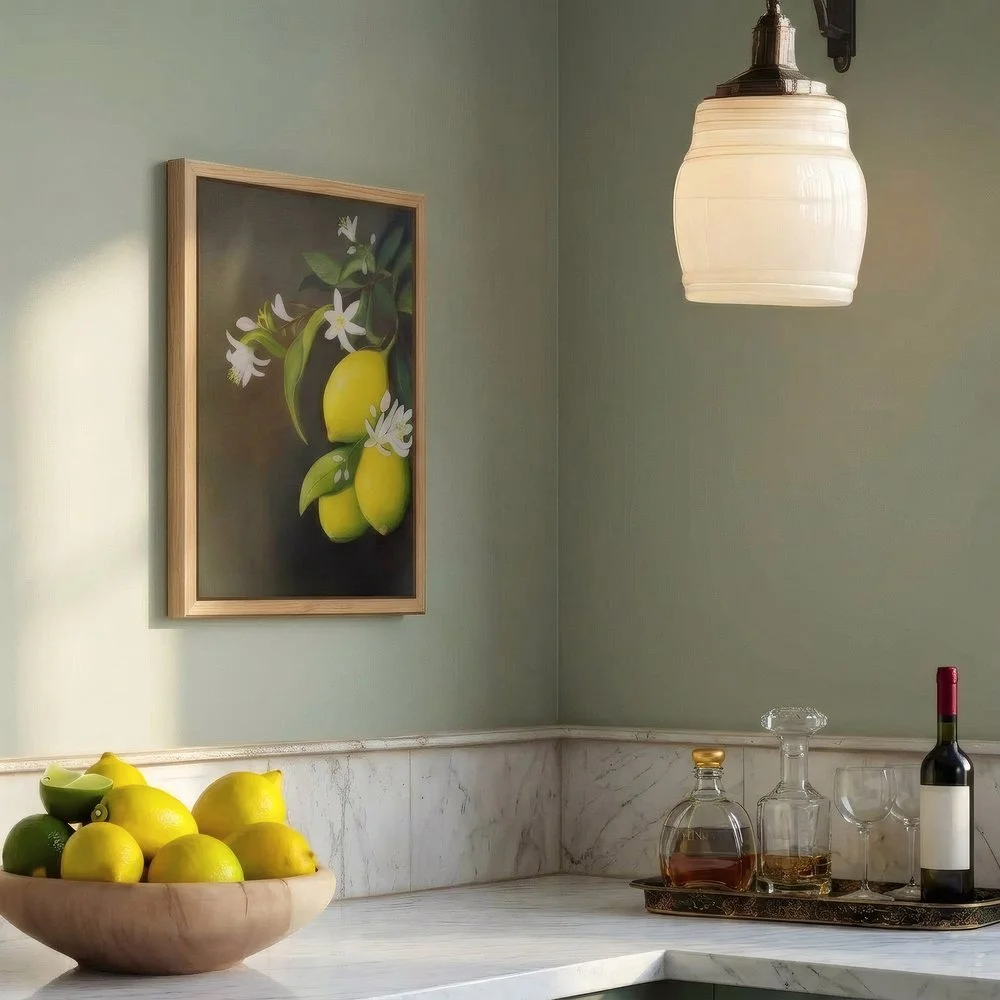
Original art can connect to a room through color, mood, and subject without needing to match every detail.
Start with the room, but do not let it take over
A painting should feel connected to the space, but it does not need to match everything in it. If it matches too perfectly, it can start to feel like it was chosen by the room instead of by a person.
The better question is not, “Does this match?” It is, “Do I actually want to keep looking at this?”
That matters more. A painting should give the room something it did not have before. It might add movement, contrast, quiet, warmth, structure, or just a good visual pause. Sometimes the right piece is the thing that keeps a room from feeling too finished.
What matters more than matching?
Scale matters. Mood matters. Placement matters. Color matters too, but not in the way people sometimes think.
A painting does not have to pull every color from the room to work. It can connect through a shared tone, a similar feeling, or even a useful contrast. A quiet room can handle a piece with more energy. A very polished room can sometimes benefit from something more human and imperfect.
The goal is not to match every pillow. The goal is for the piece to feel considered.
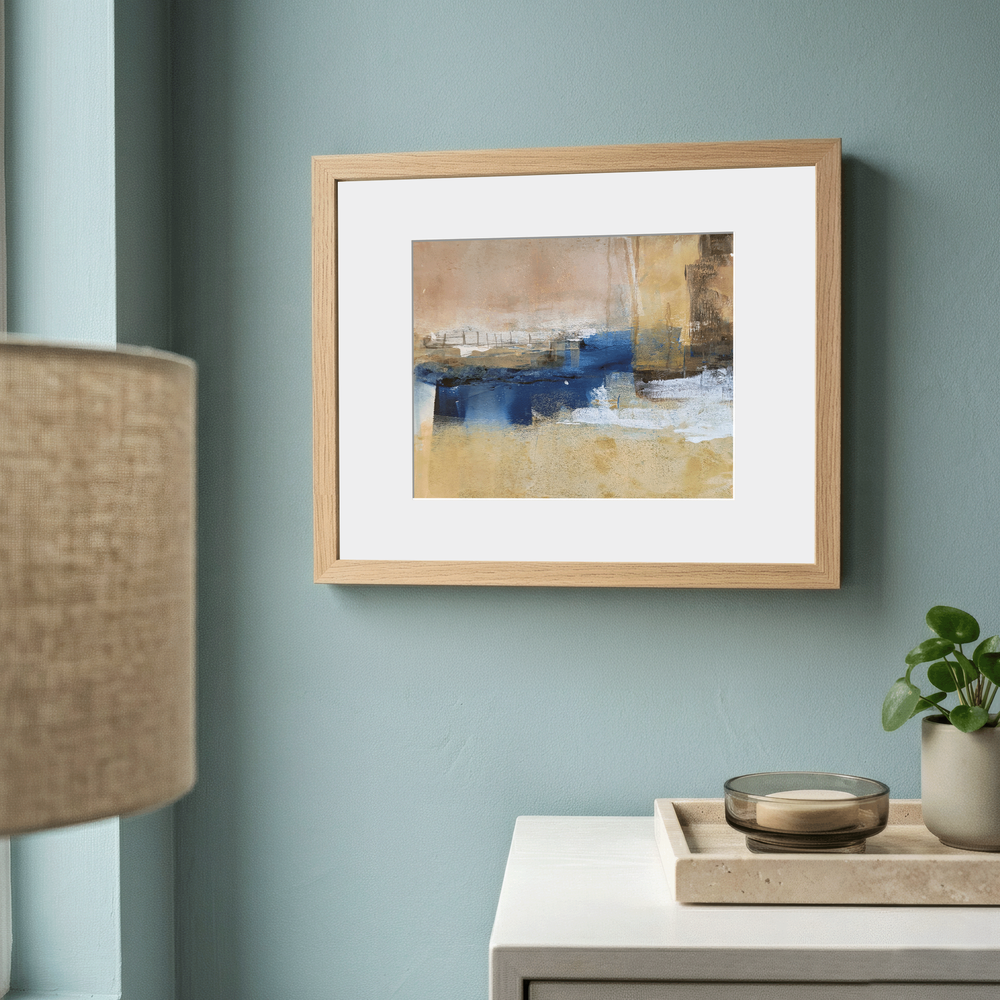
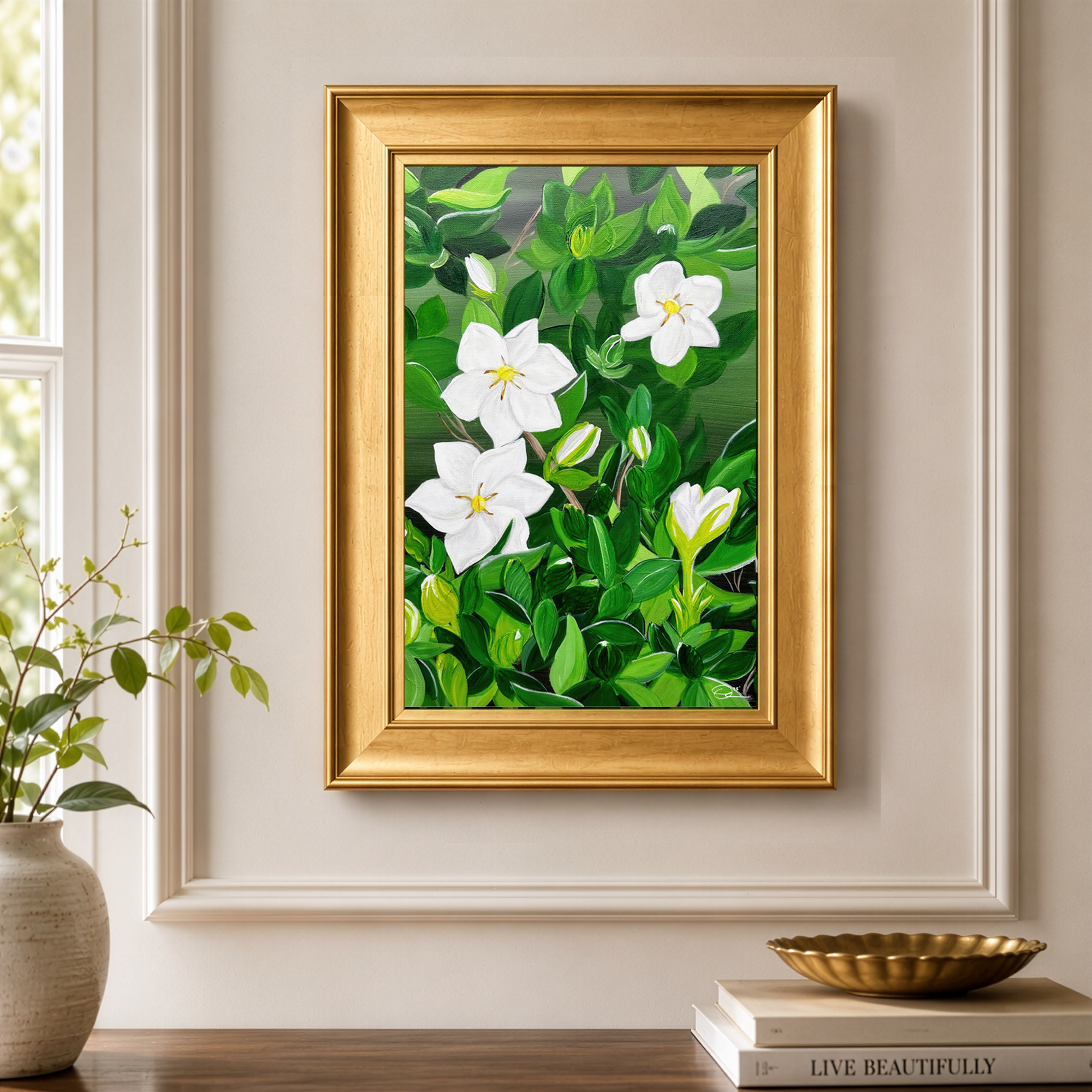
Can art work if the colors are different from the room?
Yes. Sometimes that is exactly why it works.
A painting can sit apart from the room a little and still feel right. It might echo one color from the space, or it might introduce something new. A black-and-white abstract piece can work in a warm room because it adds structure. A still life with a little color can bring attention to a quiet corner without taking over the space.
Original art has a different kind of presence than printed or mass-produced decor. You want that presence to be felt.
How should I think about size?
Think about what you want the artwork to do.
A larger painting can anchor a wall, define a room, or become the main visual point in a space. That can work well over a sofa, in an entryway, in a dining room, or in a professional space where the artwork needs to hold its own.
Small work does something different. A small original painting can create a quiet moment on a shelf, in a kitchen, beside a bed, in a hallway, or as part of a collected grouping. Small pieces can feel personal because you often experience them up close.
Both can be strong. They just work differently.
Should art be chosen before or after the room is finished?
Either can work.
If the room is mostly finished, the artwork can bring the final layer — the part that makes the space feel less generic and more lived in. If the room is still coming together, a painting can help set the mood early and guide some of the decisions around color, texture, and feeling.
For interior designers, original art can be the thing that keeps a project from feeling too expected. It gives the room something specific.
Can I commission art for a specific space?
Yes, but there is a difference between commissioning original art for a space and asking an artist to make something that simply matches the decor.
A good commission can consider size, color direction, mood, and where the piece will live. Those things matter. But I do not think a painting should be reduced to matching a sofa, a rug, or a paint swatch.
The room can guide the piece. It should not control it completely.
What should interior designers know?
If you are sourcing art for a home, office, restaurant, or client project, it helps to think about what the piece needs to do in the space. Does it need to anchor the room? Add contrast? Bring quiet? Create a focal point? Support the overall feeling without looking too coordinated?
Original art can help a space feel less finished-in-a-day. It brings in something with a hand behind it — a few decisions, a few imperfections, and a little more life than something ordered to simply fill a wall.
For local projects in Cary, Raleigh, Durham, and the Triangle, buying directly from artists can also make the process more practical. You can ask about scale, availability, pickup, delivery, and whether a commission might make sense.
So, does it have to match?
It should belong, but it does not have to match.
The right painting should hold your attention and give the room something it did not have before. It might be subtle. It might be bold. It might be small and quiet. It might be large enough to change the whole feeling of the space.
Good art does not need to blend in perfectly. Sometimes the reason it works is because it does not.
