
How to Choose Original Art for Your Home or Office
Choosing original art for your home or office can feel harder than it should. You might wonder if the colors need to match, if the size is right, or if the piece makes sense in the room. Most of the time, the better question is simpler: does it hold your attention, feel right in the space, and bring something real into the room?
What should you consider when choosing original art?
Start with how the piece feels. Scale, color, and placement matter, but they are not the whole story. A good painting should hold your attention a little longer than expected. It should give the room something it did not have before — movement, quiet, warmth, tension, color, or a point of focus.
Does original art need to match the room?
Not exactly. Art should feel like it belongs in the room, but it does not need to match every color in the furniture, rug, or pillows. Sometimes the best piece is the one that breaks things up a little. A painting can connect to a room through mood, contrast, texture, or energy rather than an exact color match.
What size painting should I choose?
It depends on the space and what you want the painting to do. A large painting can anchor a room and give a wall a clear focal point. A smaller painting can work beautifully on a shelf, in a kitchen, beside a bed, in a hallway, or as part of a collected grouping. Small work does not have to feel minor. It can create a quiet moment in a room.
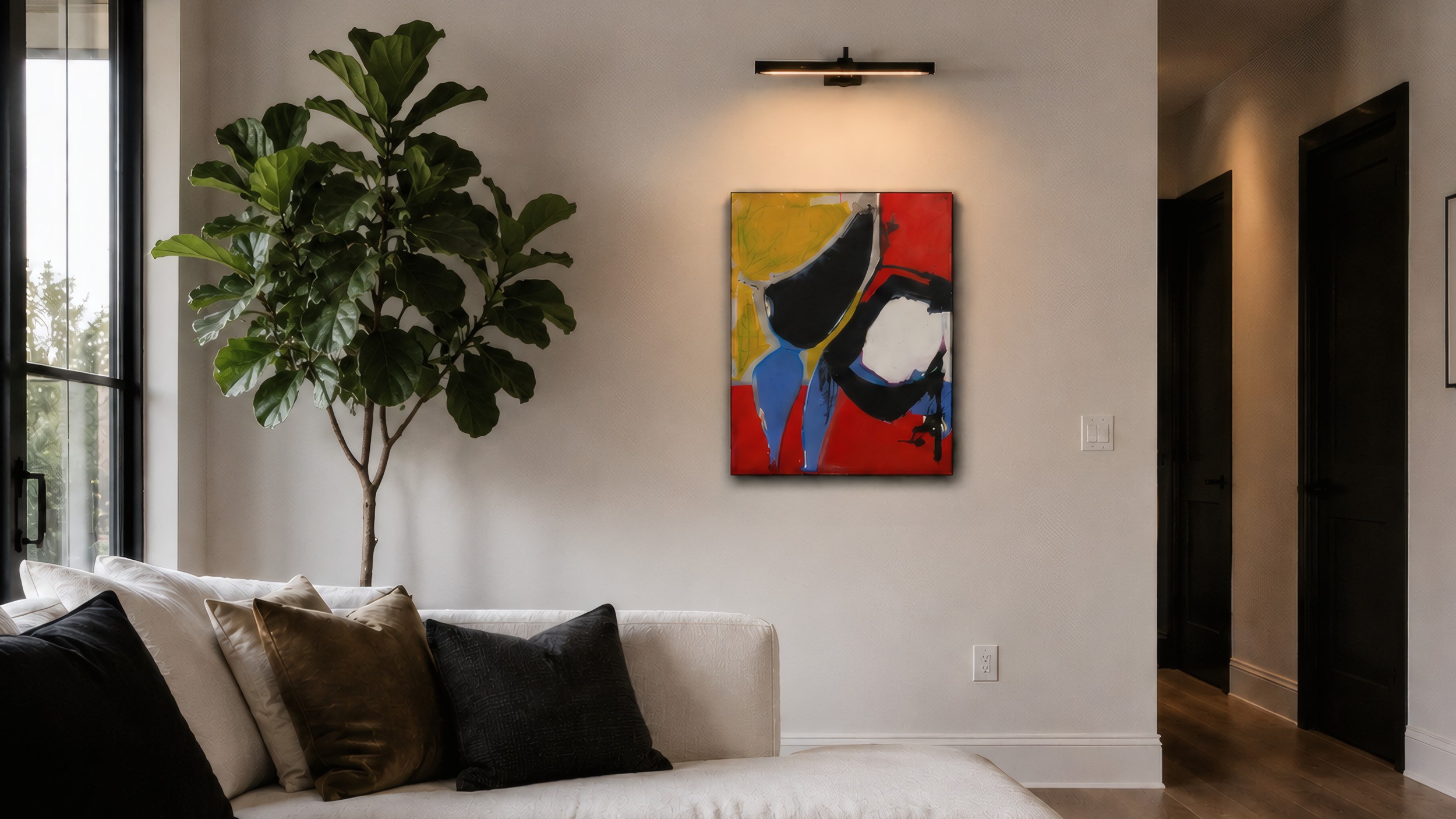
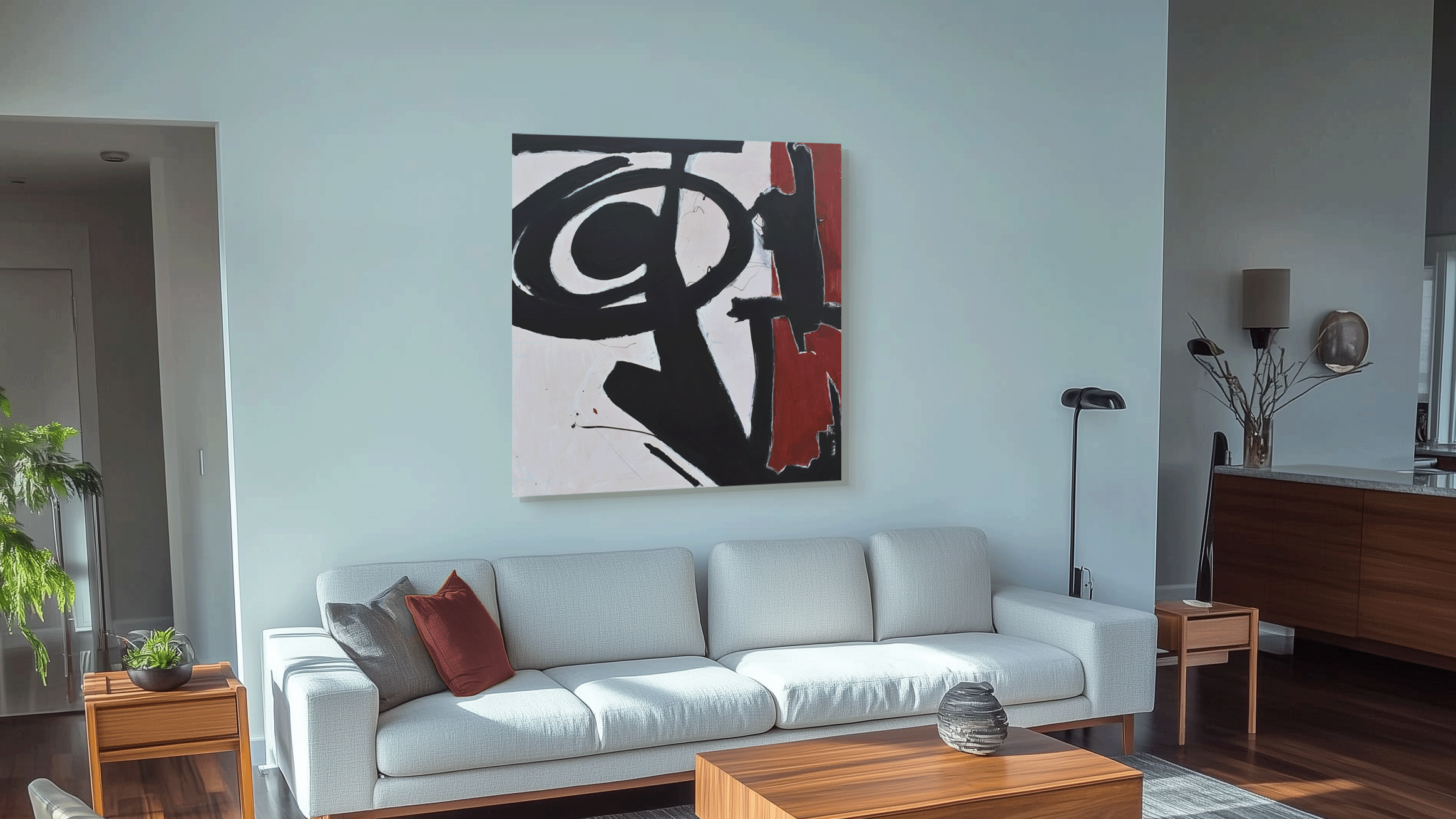
A large abstract painting can give a room movement, scale, and a strong focal point.
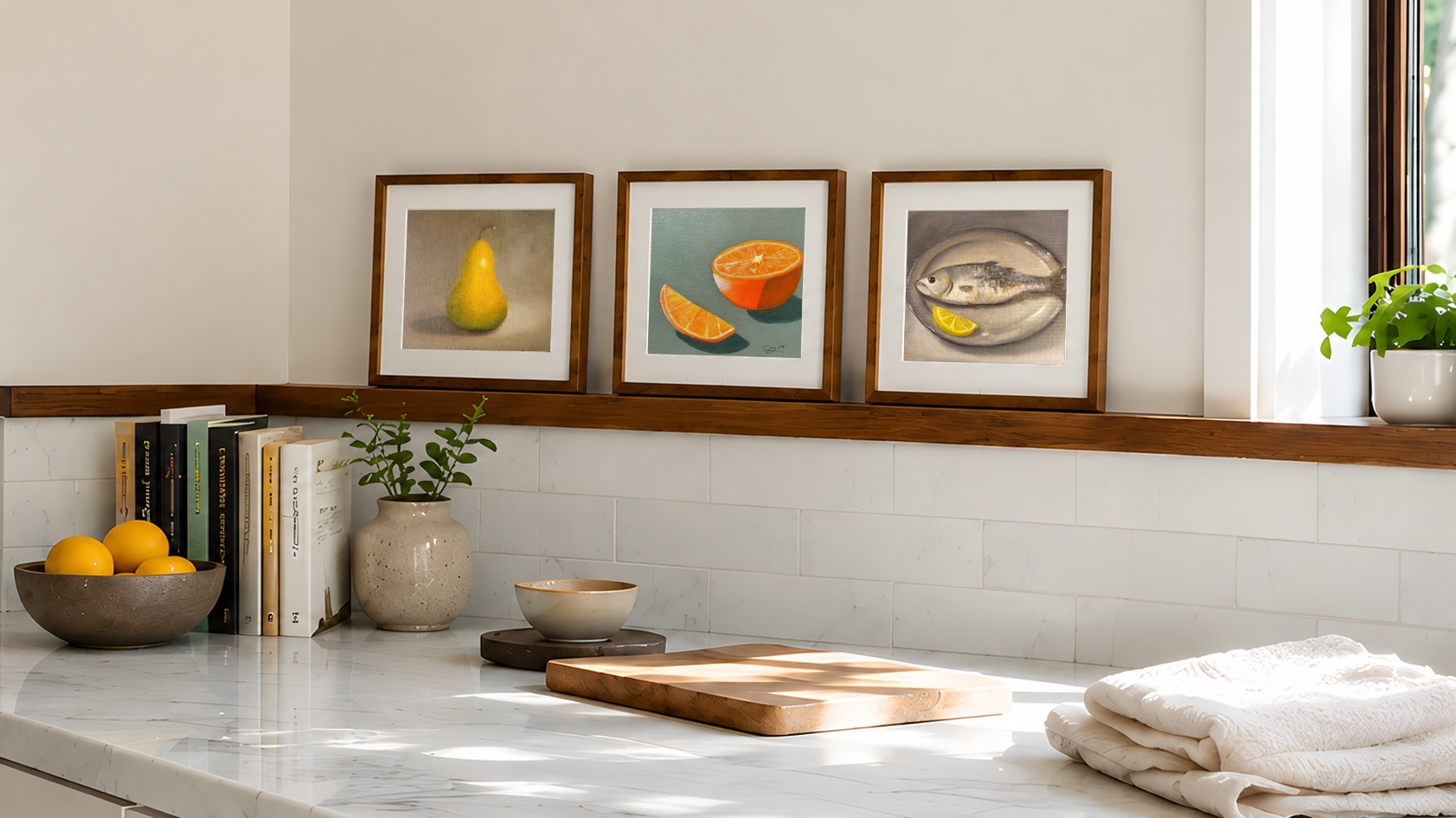
Small still life paintings can create quiet moments in kitchens, shelves, and collected interiors.
How do I choose abstract art?
With abstract art, you do not have to “figure it out” in a literal way. Pay attention to the movement, color, marks, and overall feeling of the piece. Does it feel calm, restless, open, heavy, playful, atmospheric, or bold? Abstract art works well when it adds something to the room emotionally, not just visually.
How do I choose a still life painting?
Still life paintings are often about attention. A simple subject — fruit, flowers, food, a vessel, or an everyday object — can bring intimacy and focus to a space. Look for a piece that feels observed rather than decorative. A still life can work especially well in kitchens, dining rooms, shelves, bedrooms, and smaller walls where people can see it up close.
Is it better to buy original art directly from the artist?
Buying directly from the artist can make the process feel clearer and more personal. You can ask about the size, materials, framing, pickup, delivery, or where a piece might work. You also know exactly where the painting came from. That matters when you are buying something made by hand, not a reproduction or mass-produced wall decor.
Where can original art work in a home or office?
Original art can work almost anywhere if the scale and feeling are right. Living rooms, entryways, dining rooms, kitchens, bedrooms, offices, creative studios, restaurants, and professional spaces can all benefit from real artwork. The goal is not to fill every wall. The goal is to choose the places where a painting can actually be noticed.
What if I like a piece but I’m not sure where it would go?
That is normal. Sometimes you know you like a painting before you know exactly where it belongs. Start by thinking about where you would enjoy seeing it every day. If the piece keeps pulling you back, there is usually a reason. The right placement can often come after the connection.
